
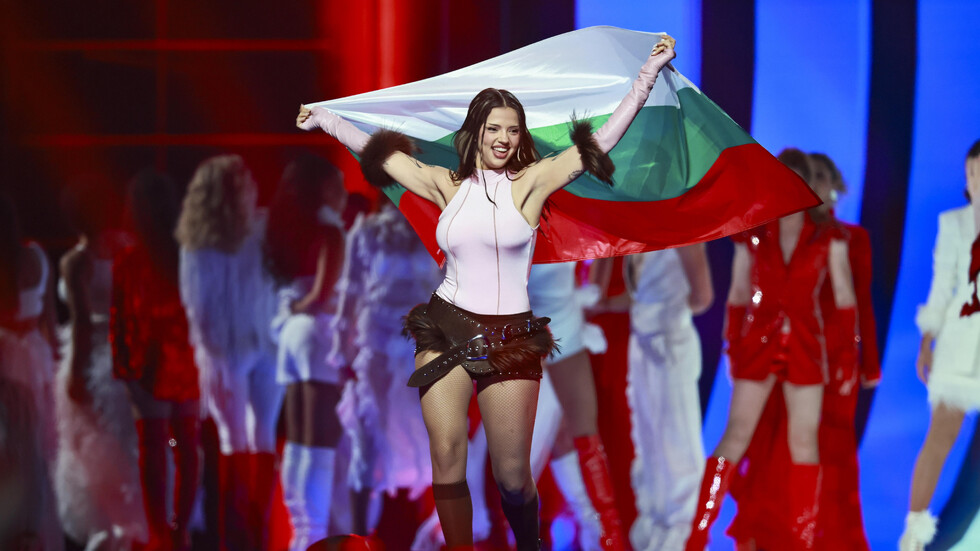
The historic triumph of DARA and her explosive track “Bangaranga” at Eurovision 2026 has triggered a massive wave of euphoria across the Bulgarian music community. For a country that has spent decades chasing the ultimate musical crown, this historic victory marks a turning point, prompting emotional tributes and public celebrations from generations of artists who once carried the national flag on the global stage.
From early pioneers to record-breaking icons, Bulgaria’s Eurovision alumni have officially united on social media to welcome Europe’s new pop queen.
Kristian Kostov Celebrates a Shared Dream Fulfilled
Among the first to react was Kristian Kostov, the vocal powerhouse who previously held Bulgaria’s highest Eurovision record—finishing in an impressive second place in 2017 with “Beautiful Mess.” Kostov, who performed in Vienna this year as a special guest and shared an intimate connection with DARA since their early days on X Factor, could barely contain his pride.
“Last night, my beloved DARA made our entire nation proud, and I am so incredibly happy that you gave Bulgaria this beautiful celebration of love and music,” Kostov shared in a deeply personal Instagram post. “I have always believed in you, and I truly couldn’t be happier for anyone else. Our shared dream has finally come true! It was a flawless performance through every single rehearsal and show, whether you stood before 100 people or 100 million.”
Poli Genova Welcomes Eurovision to Bulgaria
Pop diva Poli Genova, who represented the nation twice (in 2011 and 2016) and captured a prestigious fourth-place finish with her smash hit “If Love Was A Crime,” was equally ecstatic about the future implication of the victory.
Taking to Facebook, Genova kept her tribute sharp and forward-looking, celebrating the historic hosting rights that now belong to the country: “I am so immensely proud of you, DARA. Eurovision, welcome to Bulgaria!”
A Cultural Earthquake: Redefining the Future of Pop
While many offered congratulations, Krassimir Avramov (Eurovision 2009) analyzed the profound impact of the track. To him, DARA’s urban-infused anthem represents a major shift in the musical landscape.
“DARA and Bulgaria’s victory with ‘Bangaranga’ at Eurovision is not just another triumph of a good song; it is a cultural earthquake,” Avramov wrote. “This is the exact moment the new generation asserted itself in the loudest, boldest, and most definitive way possible. This track wasn’t manufactured to please everyone; it was engineered to wake people up. It is the voice of a new wave of rebels who reject traditional boundaries. The era of smooth, safe, and predictable formulas is officially over—the future belongs to the brave.”
Universal Praise Across Generations
The wave of solidarity extended across every era of Bulgaria’s competitive history. Mariana Popova (Eurovision 2006) expressed her pure excitement, posting an emotional, “My God! DARA won! I am so happy.”
Meanwhile, pop-folk icon Sofi Marinova (Eurovision 2012) emphasized the artistic work ethic that led to this moment. “Today, all of Europe is talking about Bulgaria,” Marinova stated. “DARA didn’t just win—she demonstrated exactly what raw talent, relentless hard work, and the Bulgarian spirit look like on the world stage. With her voice, commanding stage presence, and massive heart, she made everyone feel the power of our culture.”
Electronic group Deep Zone Project (Eurovision 2008) summarized the victory with a powerful, poetic metaphor, posting: “Light has officially conquered the darkness.”
Overcoming Institutional Challenges
In an emotional morning message, Orlin Pavlov, lead singer of the group Kaffe—who historically served as Bulgaria’s very first Eurovision representative in 2005—admitted he woke up feeling like he was in a dream.
“I wake up this morning thinking I’m dreaming. Bulgaria is number one! DARA is number one!” Pavlov wrote. He noted that this victory comes after years of national artistic struggles and a historical lack of institutional support for the creative arts. “It is so difficult to fight with music, but everything has finally fallen into place. This is a unique and perfect example at the right moment. The real fun is just beginning.”